Historical well-file review
Review construction, drilling, completion, intervention, pressure, cement, production, and prior-abandonment records to define the well configuration, identify information gaps, and surface known risks.
Well plugging and closure
Engineering-led support that moves an inactive, uneconomic, orphaned, or problem well from historical review and field assessment through a practical, well-specific abandonment program and documented closure.
Plain-language explanation
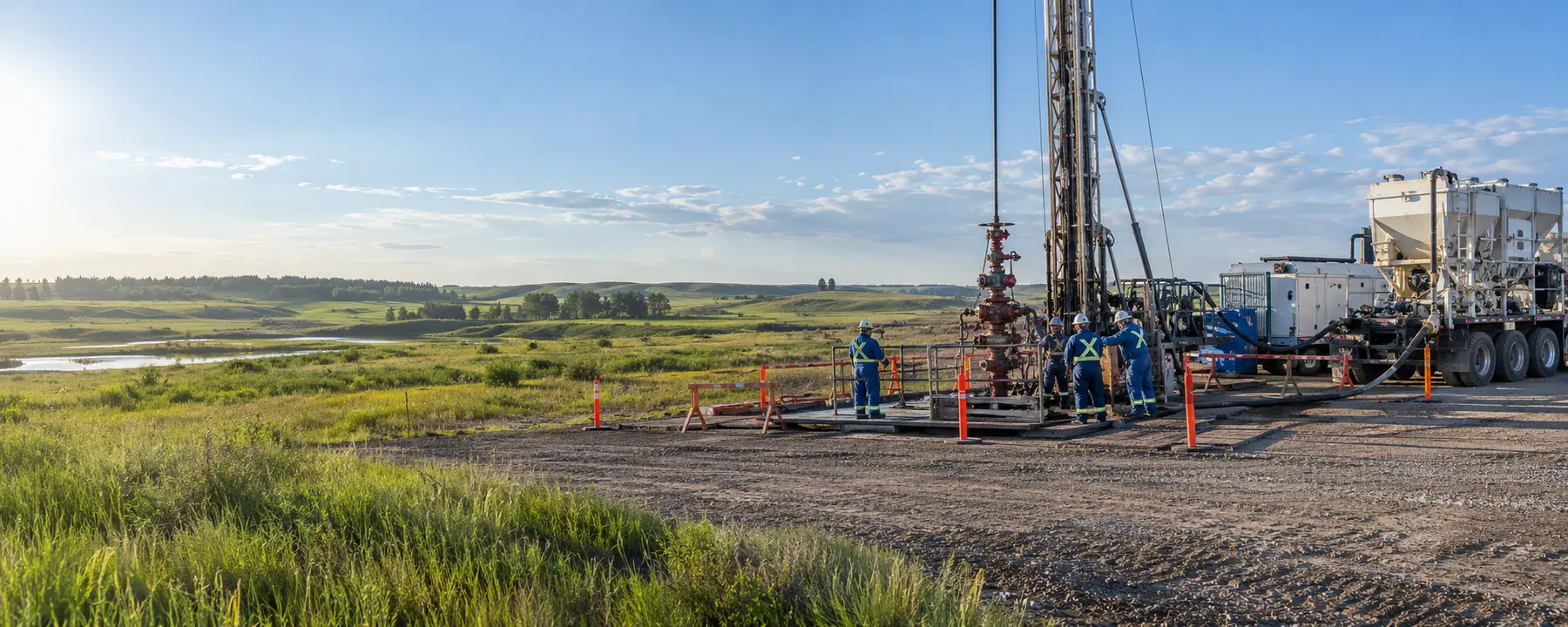
Well abandonment—often called plugging and abandonment—is the downhole work used to permanently close a well. The objective is to prevent oil, gas, formation water, or other fluids from moving between underground formations or reaching the surface after the well is no longer in use.
Decommissioning is the broader closure effort around that downhole work. It can include removing tubing, rods, wellhead equipment, tanks, lines, and surface infrastructure; correcting earlier abandonment work; cutting and capping the casing; managing affected soil or water; and restoring the site in accordance with the approved program and jurisdictional requirements.
When this service is needed
Typical support scope
Review construction, drilling, completion, intervention, pressure, cement, production, and prior-abandonment records to define the well configuration, identify information gaps, and surface known risks.
Assess site access and wellhead condition, document field observations and pressures, and coordinate appropriate surface casing vent-flow or integrity screening before detailed planning.
Translate the available records and verified field conditions into a practical step-by-step program covering crews, equipment, materials, safety considerations, contingencies, verification, and regulatory documentation.
Coordinate removal of rods, tubing, pumps, previous devices, or other equipment that interferes with the approved abandonment program.
Support bridge plugs, retainers, cement plugs, cement squeezes, circulation, porous-zone isolation, and repairs to deficient prior work.
Coordinate logging, pressure monitoring, vent-flow testing, cut-and-cap preparation, equipment removal, and restoration records.
Field-ready program development
A sound abandonment design must be usable by the people performing the work. Grindstone can turn well records, field observations, regulatory requirements, and engineering decisions into a coordinated program for supervisors, service companies, owners, and prime contractors.
How the work moves forward
Study the historical well file, identify missing or conflicting information, inspect current site and wellhead conditions, and document relevant pressure or integrity observations.
Develop a well-specific execution plan that aligns the owner, engineer, regulator, prime contractor, crews, equipment, materials, safety requirements, verification criteria, and contingencies.
Complete the approved downhole work while recording depths, volumes, pressures, returns, tests, and any field changes.
Prepare for final cut-and-cap, surface decommissioning, site restoration, and the records required by the project and jurisdiction.
What successful support produces
Grindstone can support a complete scope or a defined portion of a prime contractor’s program. The exact work plan depends on well construction, condition, available records, approved engineering, regulator requirements, contractor qualifications, and site-specific risk.
Start a project conversationStart with the site, well, schedule, and support you need. Mike or Clive will help identify the practical next conversation.