Water-well support
Coordinate well inspection, accessible construction records, yield or condition observations, repair resources, and decommissioning by qualified personnel.
Water and groundwater
Grindstone supports water-well and groundwater projects that require organized field work, reliable observations, sampling, monitoring, decommissioning support, environmental coordination, and qualified professional oversight.
Plain-language explanation
A water well is a constructed opening used to reach groundwater for domestic, agricultural, municipal, industrial, monitoring, or dewatering purposes. Groundwater is the water held below the surface in soil and rock. A well can provide access to that resource, but it can also become a pathway for contamination or unwanted movement if it is damaged, poorly sealed, improperly maintained, or abandoned incorrectly.
Work may involve domestic and rural supply wells, commercial or industrial wells, monitoring wells, observation points, dewatering wells, environmental boreholes, or unused wells requiring proper decommissioning. Hydrogeology, geoscience, well construction, and environmental requirements vary by province and project, so Grindstone coordinates with the appropriately licensed well contractors and qualified professionals needed for each scope.
When this service is needed
Typical support scope
Coordinate well inspection, accessible construction records, yield or condition observations, repair resources, and decommissioning by qualified personnel.
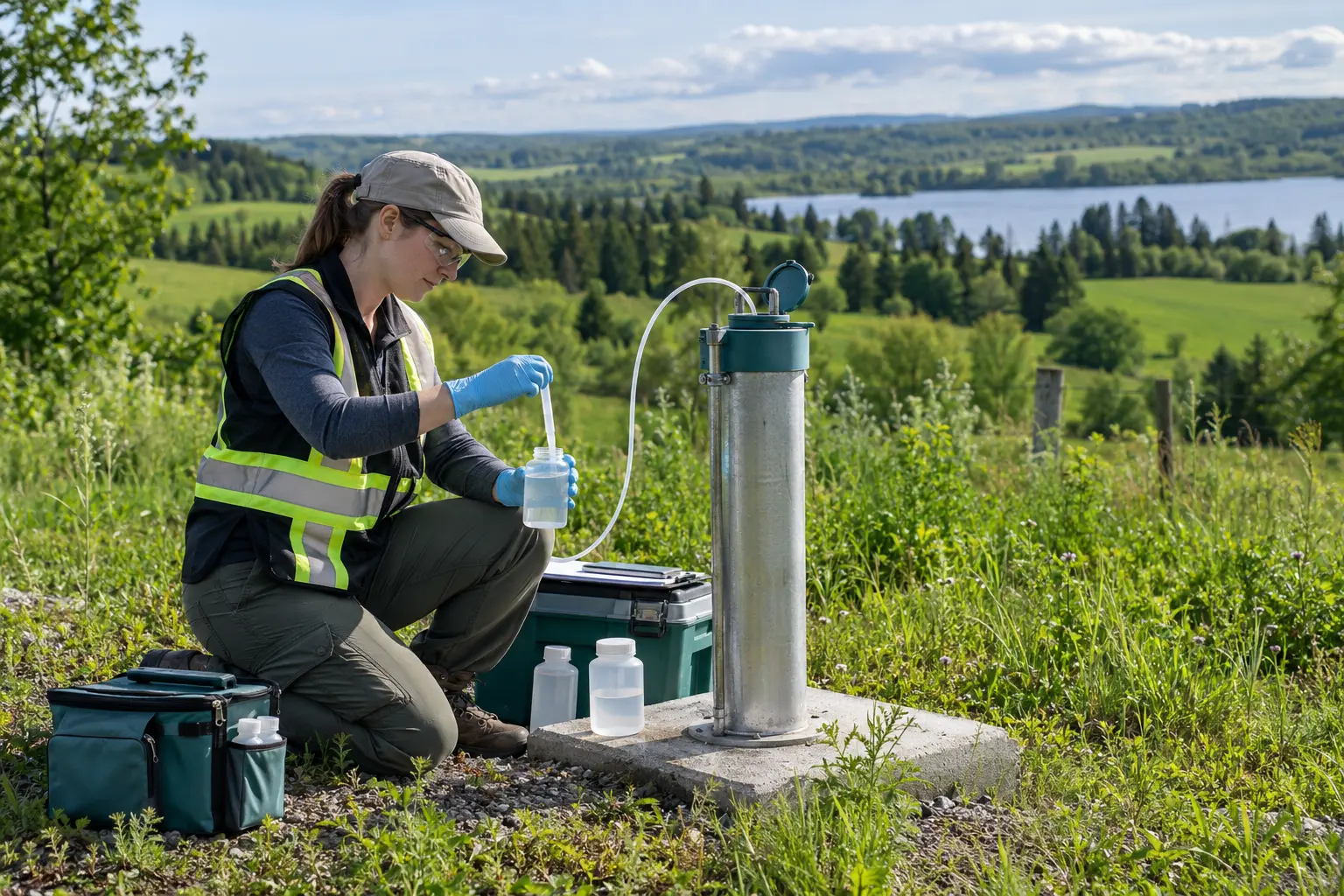
Support monitoring locations, water-level measurements, sampling plans, field parameters, purging, sample handling, and laboratory coordination.
Organize recurring sampling, well maintenance, field documentation, trend observations, access, logistics, and communication with the responsible professional.
Support approved sealing, abandonment, borehole closure, surface restoration, and records intended to prevent future pathways or hazards.
How the work moves forward
Clarify the well type, water use, concern, site history, receptors, records, and decision the work must support.
Select qualified professionals, well contractors, laboratories, equipment, methods, quality controls, and safety measures.
Complete measurements, sampling, inspections, monitoring, and observations using consistent documented procedures.
Support the approved repair, monitoring, remediation, or decommissioning response and preserve clear closeout records.
What successful support produces
Groundwater interpretation and water-well work may require specific professional registrations or certificates of qualification. Grindstone helps coordinate the field scope and appropriate partners while respecting provincial, territorial, municipal, and project-specific requirements.
Start a project conversationStart with the site, well, schedule, and support you need. Mike or Clive will help identify the practical next conversation.