Baseline characterization
Document vent rate, pressure behaviour, fluid observations, accessible well data, operating history, and previous repairs.
Surface casing vent flow
Field investigation and remediation support for gas or fluid detected at the surface casing vent, with the goal of understanding the source, restoring isolation, and verifying the result.
Plain-language explanation
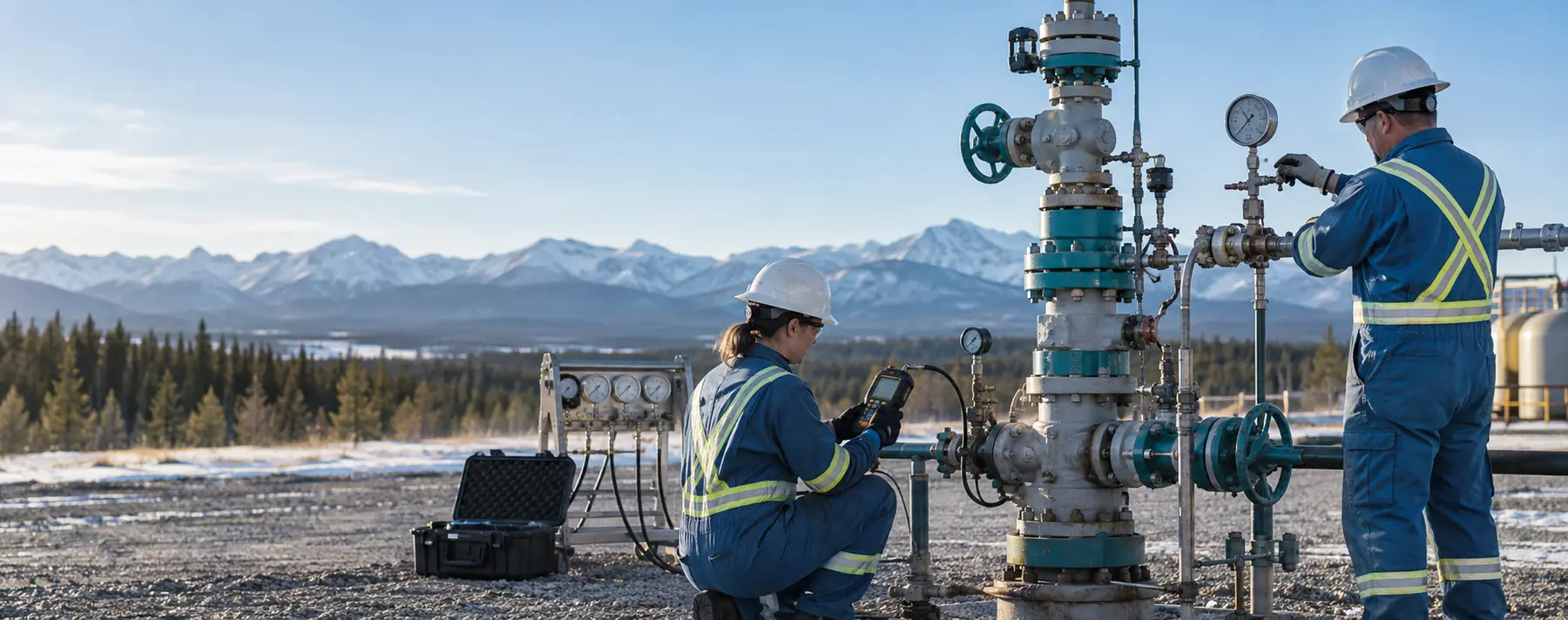
Surface casing vent flow, commonly shortened to SCVF, is gas or fluid flowing from the surface casing vent assembly. The vent exists so pressure outside the production casing can be observed rather than trapped. A measurable flow can indicate that formation fluids are moving through a pathway outside the intended well barriers.
An SCVF finding does not by itself define the repair. The team first needs to characterize the flow, pressure, composition, history, and likely source. That evidence helps the responsible professionals select an investigation or remediation program that fits the well and the applicable requirements.
When this service is needed
Typical support scope
Document vent rate, pressure behaviour, fluid observations, accessible well data, operating history, and previous repairs.
Support pressure testing, gas or fluid sampling, noise-temperature logging, cement-bond or radial-bond evaluation, and other approved diagnostics.
Coordinate well preparation, interval isolation, retainer or plug placement, cement squeezes, circulation, and other engineered remediation steps.
Track pressures, vent rates, bubble tests, monitoring periods, and follow-up diagnostics to document whether the repair objective was achieved.
How the work moves forward
Establish a defensible baseline using repeatable field observations and calibrated instruments.
Combine well records, flow behaviour, pressure data, samples, and logs to narrow the likely pathway.
Execute the approved repair program with materials, equipment, contingency planning, and field documentation.
Verify the response over the required period and identify whether additional work or long-term observation is needed.
What successful support produces
SCVF work is engineering-led and well-specific. Grindstone’s role can include field execution, coordination, monitoring, documentation, and specialty support under the responsible owner, professional, prime contractor, and jurisdictional framework.
Start a project conversationStart with the site, well, schedule, and support you need. Mike or Clive will help identify the practical next conversation.