Immediate field coordination
Support site control, source isolation, containment, absorbent or recovery operations, drain and waterway protection, equipment mobilization, and communication with the responsible emergency and environmental parties.
Brownfields and petroleum releases
Organized field support for historical contamination and active petroleum releases—from former industrial properties and storage areas to tanker incidents, equipment failures, fuel spills, and affected soil or groundwater.
Plain-language explanation
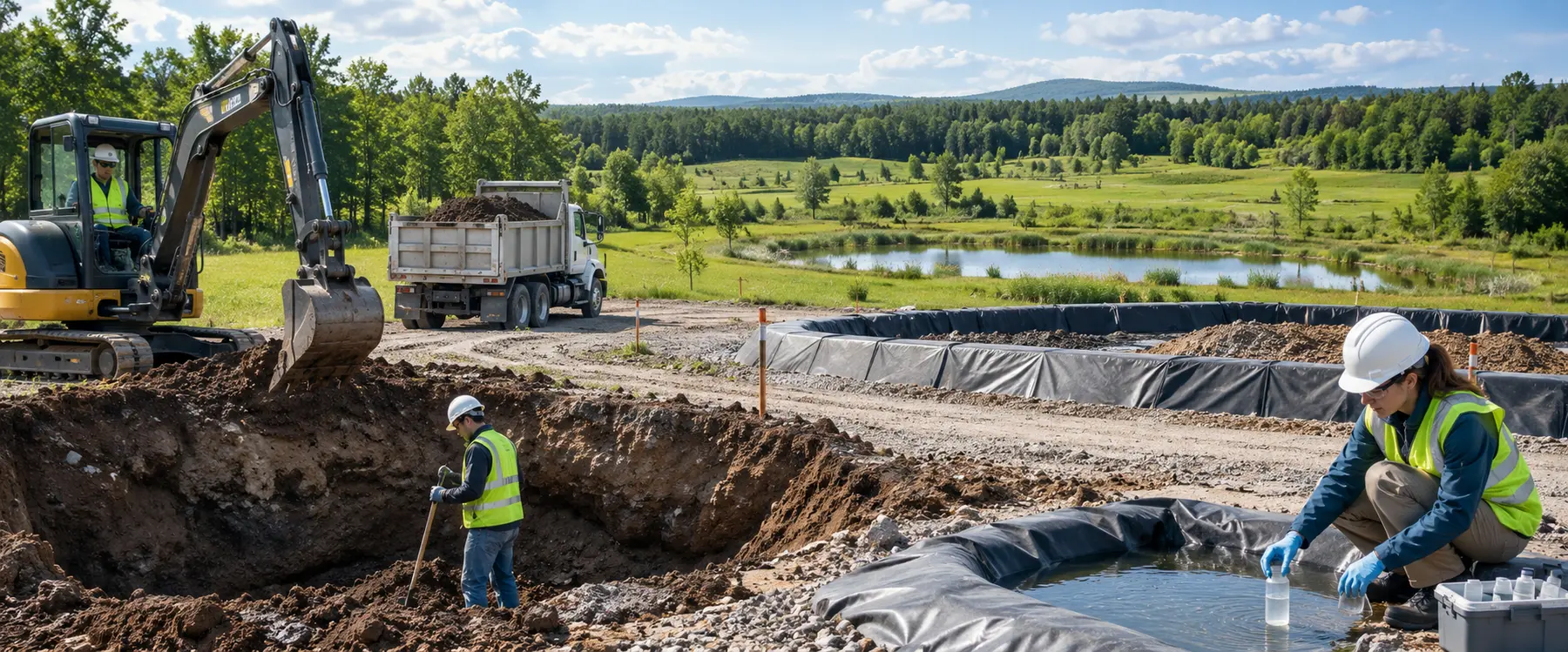
A brownfield is a previously developed property where actual or potential contamination can complicate continued use, sale, financing, redevelopment, or restoration. The concern may come from decades of industrial activity, fuel storage, pipelines, vehicle maintenance, mining, waste handling, dry cleaning, or other historical operations. It is not necessarily a single recent spill.
A tanker or petroleum spill is an active release that may require immediate scene safety, source control, containment, recovery, notification, and protection of drains, soil, waterways, and nearby properties. After the urgent phase, both brownfields and spills can require investigation, excavation, material handling, sampling, groundwater work, treatment, monitoring, and documented restoration under qualified environmental direction.
When this service is needed
Typical support scope
Support site control, source isolation, containment, absorbent or recovery operations, drain and waterway protection, equipment mobilization, and communication with the responsible emergency and environmental parties.
Coordinate utility clearance, test pits, environmental drilling, soil and water sampling, monitoring points, field screening, survey control, laboratories, and qualified professionals.
Support excavation, segregation, stockpiling, temporary containment, loading, transportation, treatment or disposal, water management, manifests, and daily field records.
Assist with confirmation sampling, backfill, grading, surface repair, revegetation, monitoring, photographs, quantities, disposal records, and closeout documentation.
How the work moves forward
Address immediate hazards through the responsible incident command, emergency services, owner, carrier, and environmental professionals.
Establish what was released, where it moved, what soil or water may be affected, and which receptors and requirements control the response.
Carry out the approved containment, recovery, excavation, treatment, transport, disposal, or in-situ work with clear field controls.
Document the remaining conditions, complete confirmation work, restore the surface, and identify monitoring or follow-up obligations.
What successful support produces
Grindstone can add field capacity beneath an environmental consultant or prime contractor, or help an owner assemble the appropriate response team. Emergency services, spill reporting, environmental conclusions, waste classification, remediation criteria, and professional sign-off remain with the authorized parties required by the jurisdiction and project.
Start a project conversationStart with the site, well, schedule, and support you need. Mike or Clive will help identify the practical next conversation.