
How a well is built
Eight stages of drilling and completing a well.
Follow a typical well from engineering and site preparation through drilling, casing, cementing, completion, testing, and production handover.
One connected program
Good well construction begins long before the bit turns.
Engineering decisions made during planning, drilling, casing, cementing, and completion influence safety, performance, integrity, and the well’s eventual retirement. Each stage depends on disciplined coordination between engineering, field crews, service companies, regulators, and the operator.
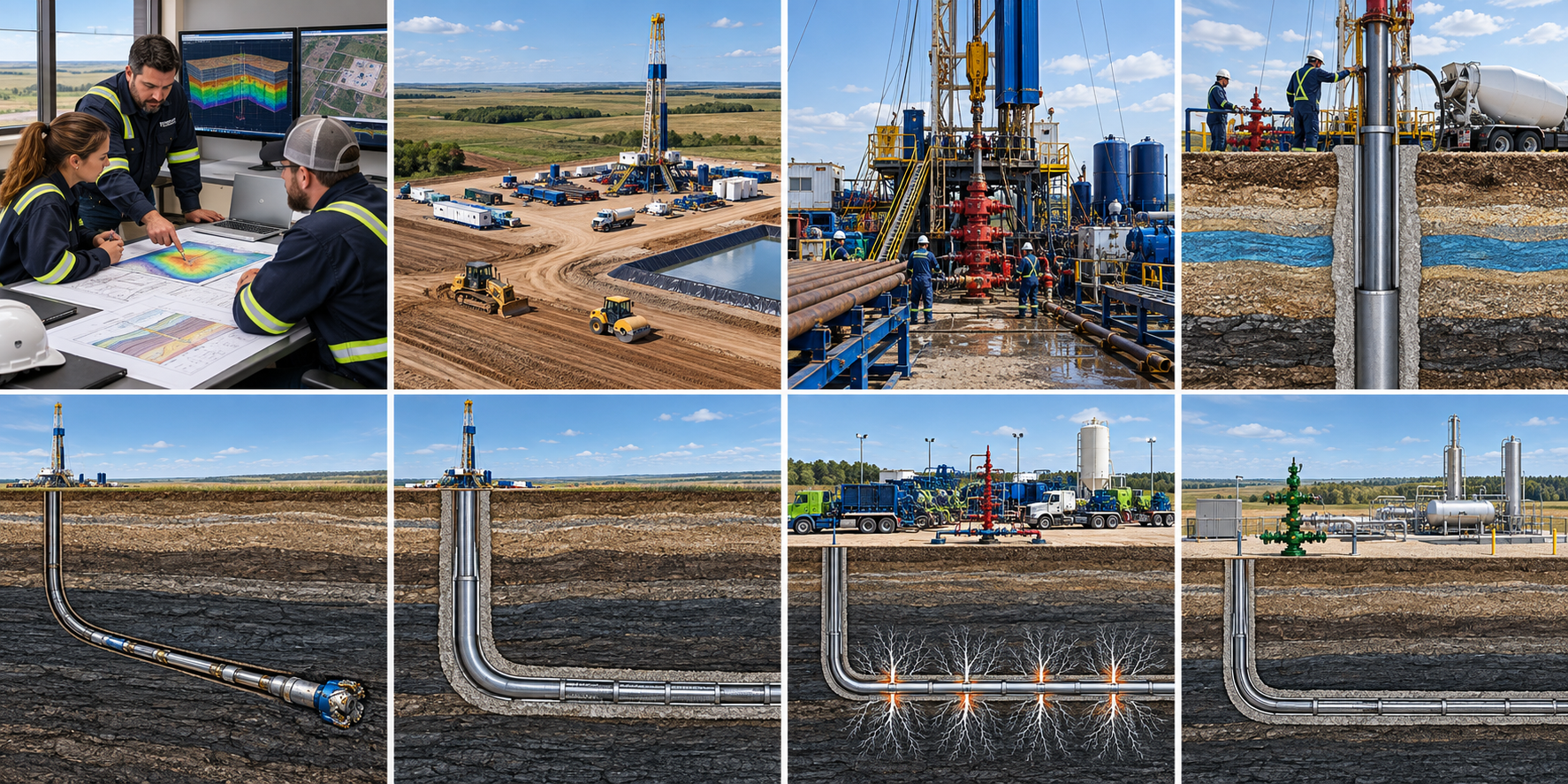
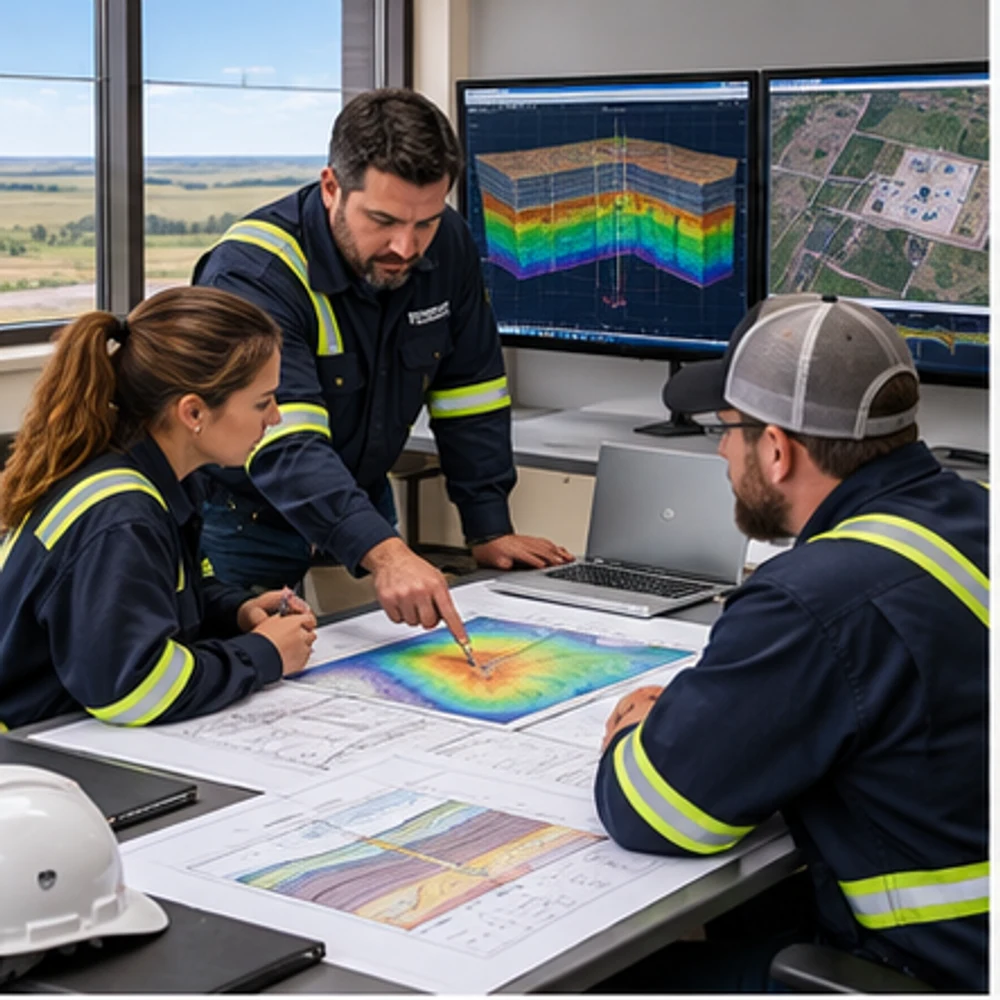 Stage 1 of 8Plan, design & permitSubsurface objectives are translated into a safe, buildable, and compliant well program.
What happens during this stage
Plan, design & permit
The team evaluates the target, offset-well information, geology, trajectory, anticipated pressures, casing and cement program, drilling fluids, well-control requirements, logistics, environmental constraints, and regulatory approvals. Risks, contingencies, cost, schedule, and verification points are defined before mobilization.
AI-created educational illustration; not a photograph of a named client site.
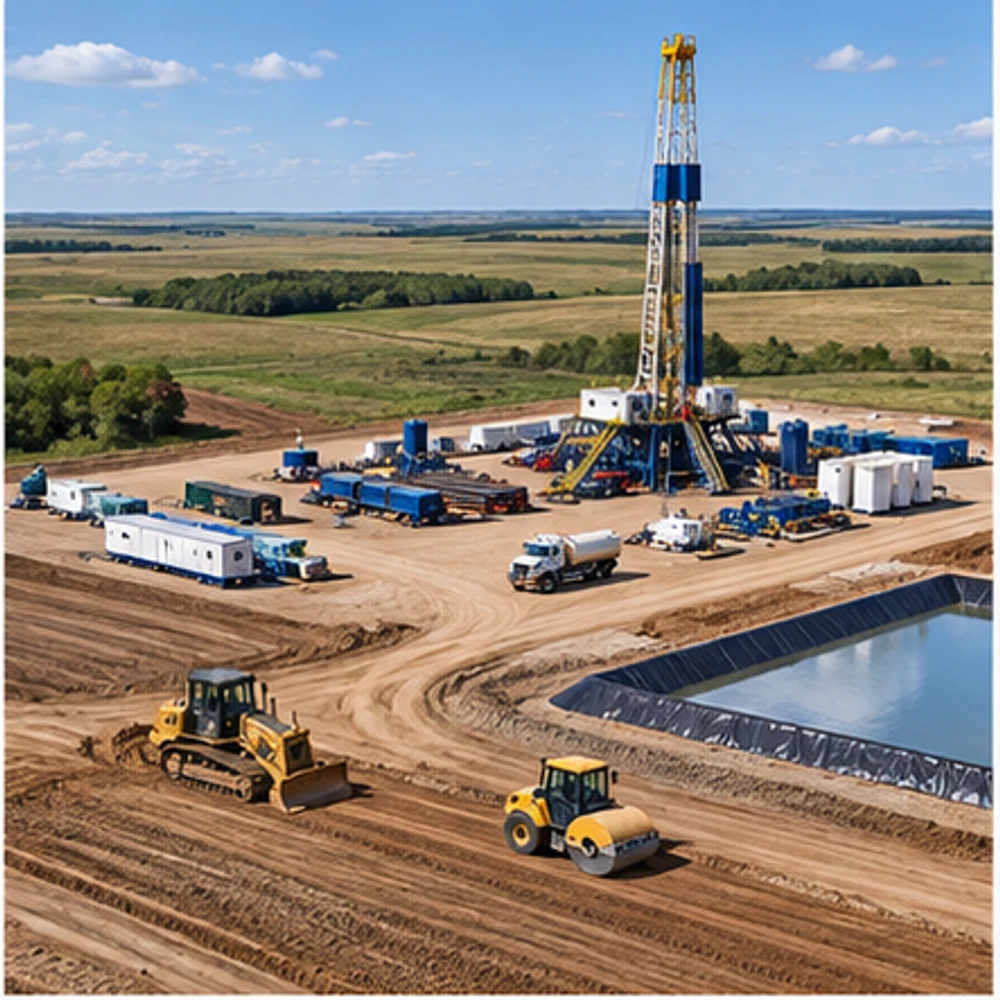 Stage 2 of 8Prepare the site & rig upThe location, access, containment, services, and drilling systems are prepared for safe operations.
What happens during this stage
Prepare the site & rig up
Access and the wellsite are prepared to the approved plan. The rig, fluid system, tanks, power, safety equipment, well-control equipment, and supporting services are mobilized and assembled. Crews complete inspections, pressure tests, communications checks, and pre-job safety reviews before drilling begins.
AI-created educational illustration; not a photograph of a named client site.
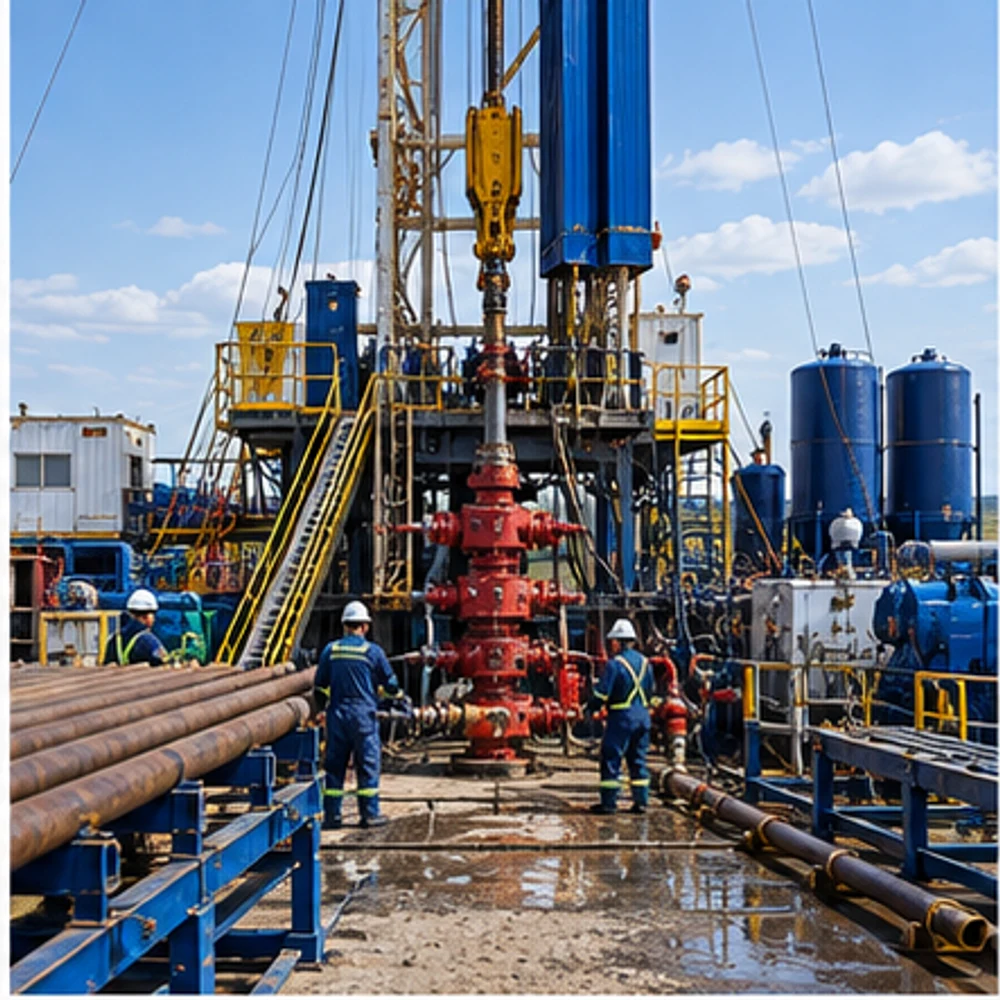 Stage 3 of 8Spud & drill the surface holeThe first hole section establishes the shallow foundation of the well.
What happens during this stage
Spud & drill the surface hole
The well is spudded and the surface section is drilled to its planned depth. Drilling fluid circulates to cool and lubricate the bit, carry cuttings to surface, and help manage wellbore pressure and stability. Crews monitor returns, formation response, hole condition, and operating parameters throughout the section.
AI-created educational illustration; not a photograph of a named client site.
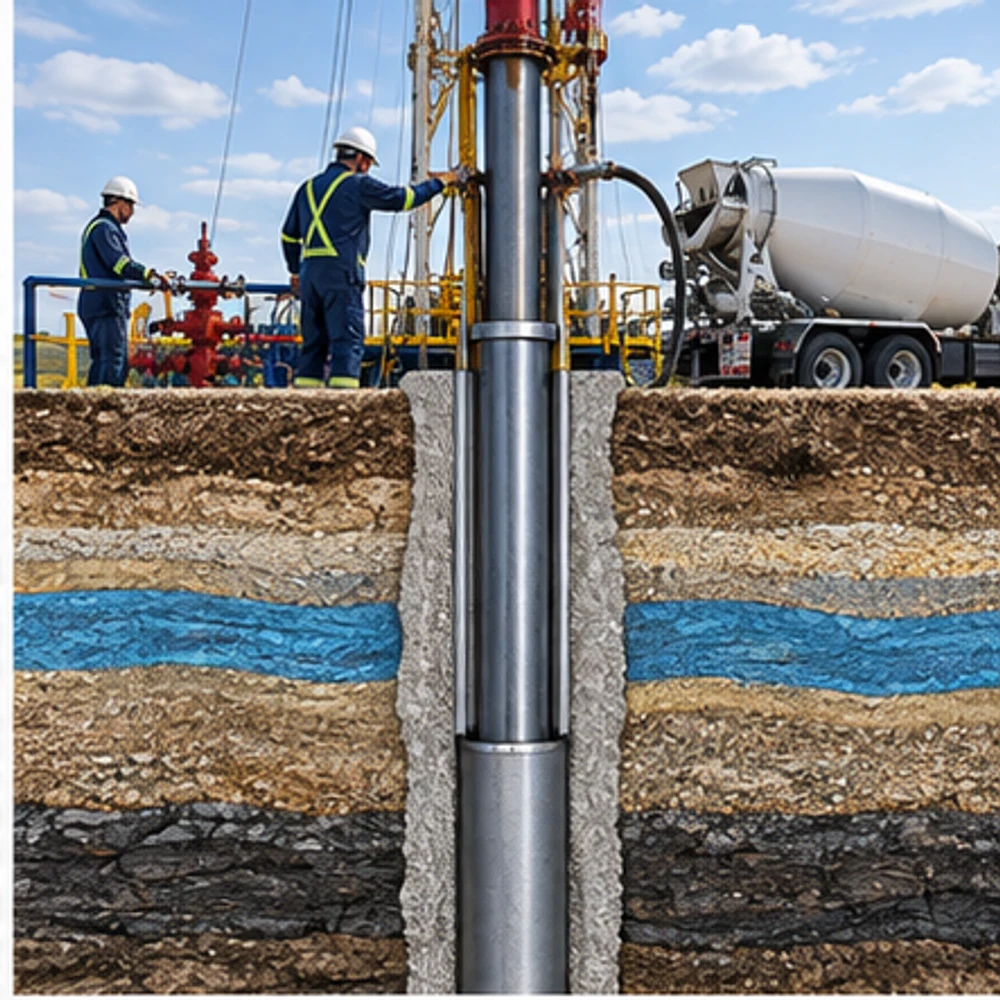 Stage 4 of 8Run & cement surface casingSteel casing and cement stabilize the shallow section and protect groundwater.
What happens during this stage
Run & cement surface casing
Surface casing is installed and cemented in place to support the wellhead, isolate protected groundwater, stabilize the borehole, and provide a competent foundation for deeper drilling and well-control equipment. Placement and integrity are evaluated against the approved design and regulatory requirements.
AI-created educational illustration; not a photograph of a named client site.
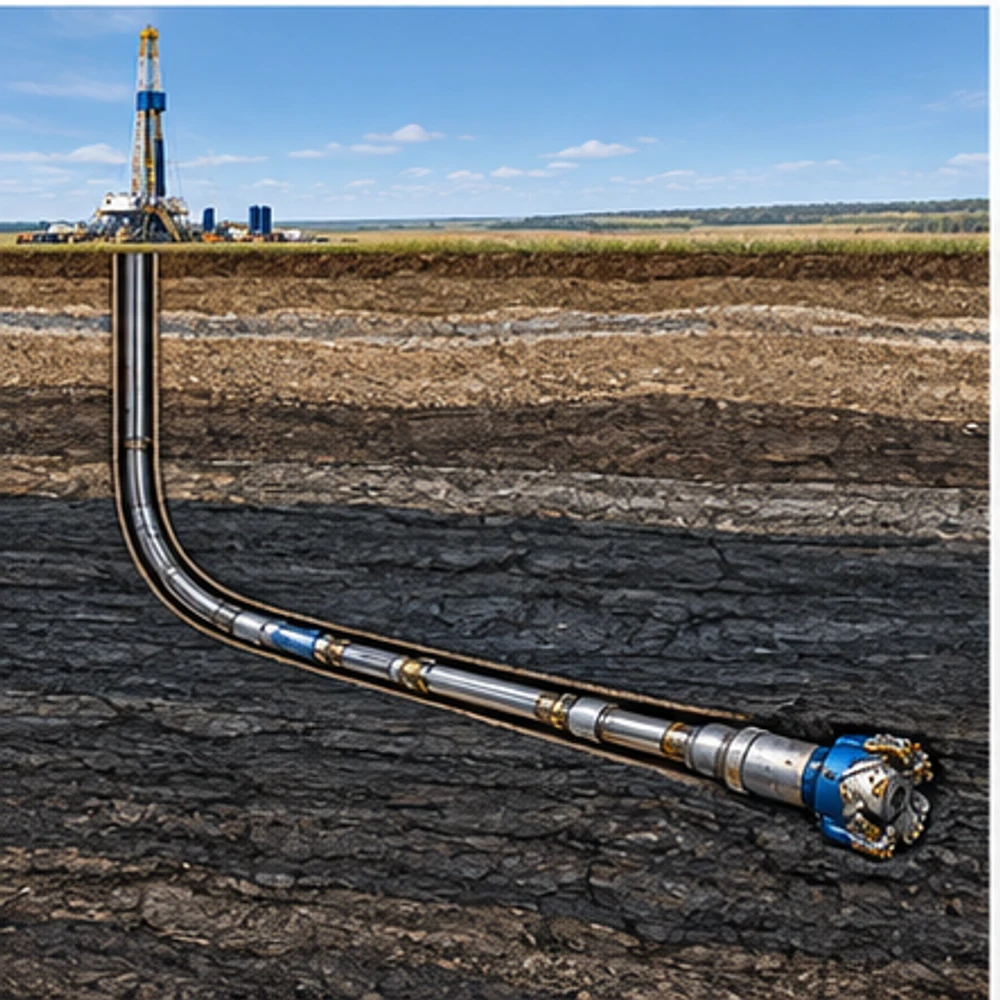 Stage 5 of 8Drill the production holeThe well advances toward the target—vertically, directionally, or through a horizontal lateral.
What happens during this stage
Drill the production hole
Additional hole sections are drilled to the planned target. Where the design calls for a directional or horizontal well, specialized tools steer the well through the build section and along the lateral. Measurements, geological information, drilling performance, pressure indicators, and wellbore condition guide real-time decisions.
AI-created educational illustration; not a photograph of a named client site.
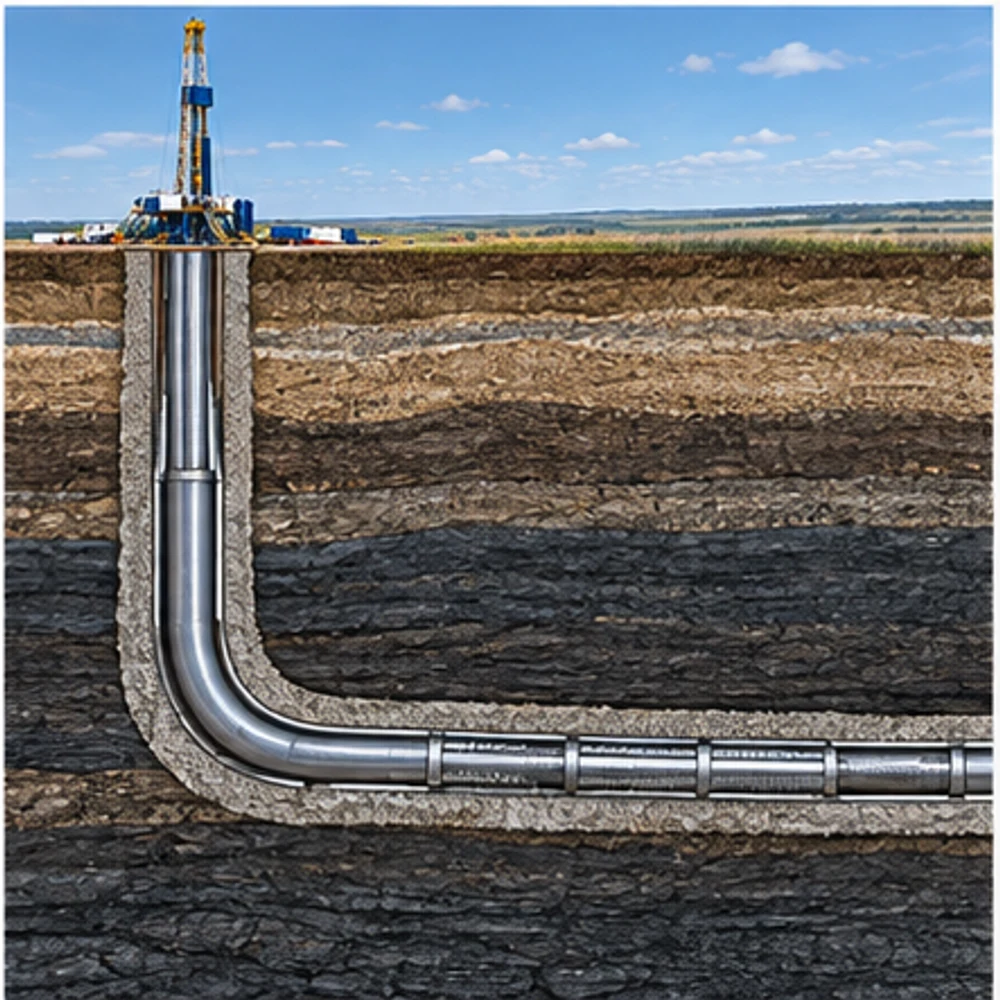 Stage 6 of 8Run & cement production casingThe final casing or liner creates a durable, isolated conduit through the producing interval.
What happens during this stage
Run & cement production casing
Production casing or a liner is run to the planned depth and cemented according to the well design. This system supports long-term integrity, isolates formations from one another, and provides the controlled pathway needed for completion, production, intervention, and eventual abandonment.
AI-created educational illustration; not a photograph of a named client site.
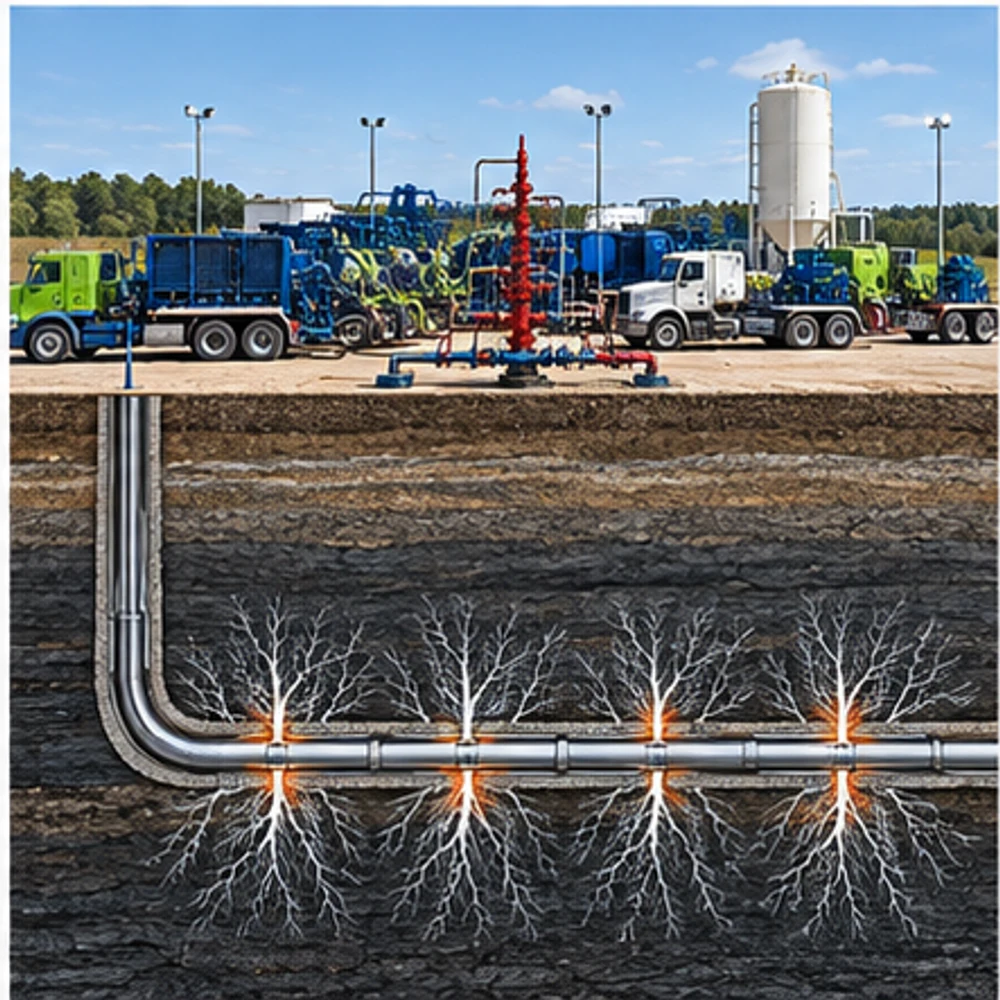 Stage 7 of 8Perforate & complete the wellThe reservoir is connected to the wellbore and equipped for controlled production.
What happens during this stage
Perforate & complete the well
Completion equipment is installed and selected intervals may be perforated to connect the reservoir to the wellbore. When the approved design requires stimulation, individual stages can be treated using fluid and proppant. Completion methods vary substantially with geology, reservoir characteristics, well architecture, operating objectives, and local requirements.
AI-created educational illustration; not a photograph of a named client site.
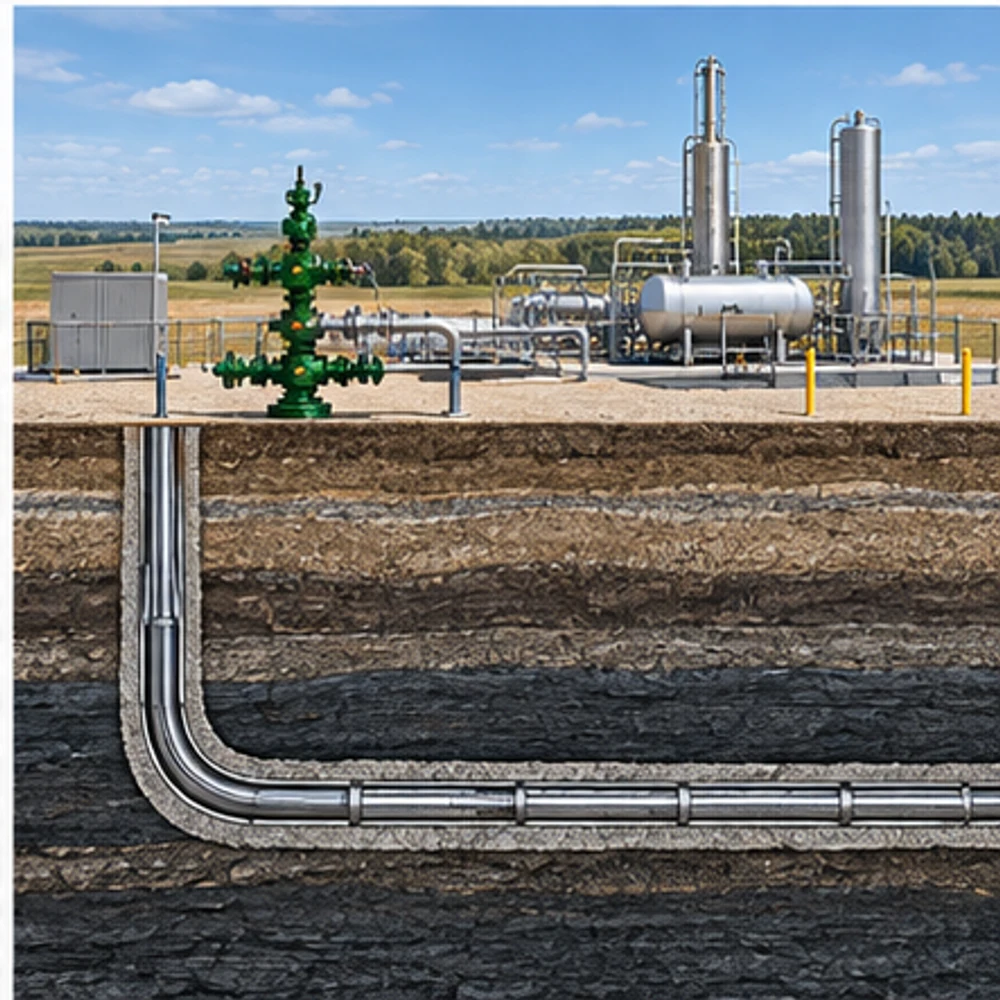 Stage 8 of 8Flow back, test & hand overThe completed well is safely unloaded, evaluated, equipped, and transitioned to operations.
What happens during this stage
Flow back, test & hand over
Controlled flowback removes completion fluids and confirms how the well responds. The team evaluates pressure, rates, produced fluids, equipment, and integrity; installs or connects production systems; reconciles records and regulatory reporting; and hands the well over for monitored operations.
AI-created educational illustration; not a photograph of a named client site.
Planning a new well?